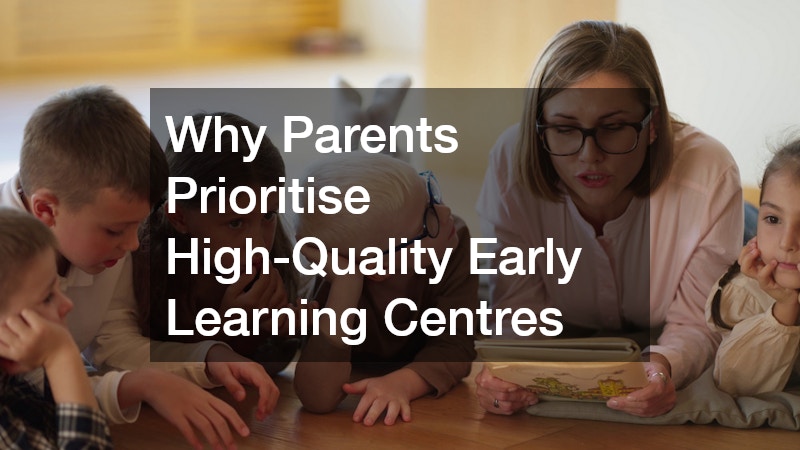
Across the country, the decision of where to enrol a child for their initial years of education is no longer just about convenience or proximity to home. As our understanding of brain development and social-emotional learning has evolved, so too have the expectations of families. Today, parents increasingly prioritise high-quality early learning centres because they recognise that these environments serve as the blueprint for a child’s future academic and personal success.
The shift from traditional “childcare” to “early learning” reflects a deeper community appreciation for the professional pedagogy that underpins the best facilities. Quality is no longer seen as a luxury but as a vital investment.
With the rising cost of living and the complexities of the current workforce, parents want to ensure that the time their children spend away from home is purposeful, nurturing and educationally rich.
The Impact of the National Quality Framework
One of the primary reasons parents are more discerning is the visibility provided by the National Quality Framework (NQF). This Australian system holds providers to rigorous standards across seven key areas, ranging from educational programmes to physical environments and leadership. When families look at early learning centres, they are often analysing these ratings to ensure the service exceeds the minimum requirements.
A high-quality centre does not just meet basic safety needs; it thrives by organising a curriculum that is responsive to each child’s unique identity. This level of intentionality is what sets premium centres apart. Parents look for educators who are not merely supervisors but co-researchers in a child’s learning journey. By choosing a highly rated service, parents feel a sense of security, knowing that their child’s cognitive and physical development is being guided by evidence-based practices and qualified professionals who understand the nuances of early childhood development.
Fostering Social Resilience and Community
In an era where many families live away from extended kin, the role of the local centre has expanded to become a modern “village”. High-quality early learning centres provide a sense of belonging that is essential for a child’s emotional wellbeing. Parents value environments where their children can socialise with a diverse group of peers, learning the essential “soft skills” of negotiation, empathy and collaboration that are difficult to replicate at home.
The focus on emotional intelligence is a major drawcard. A quality programme will prioritise the development of self-regulation and resilience, helping children to manage big emotions in a constructive way. This is achieved through stable, warm relationships between educators and children. When a child feels seen and heard, they are more likely to engage in the “messy” work of learning. Parents recognise that the confidence built in these inclusive settings acts as a protective factor, preparing children to handle the social complexities of the primary school playground with grace and maturity.
Long-Term Academic and Economic Advantages
While the immediate benefits of a quality centre are seen in a child’s daily happiness, the long-term advantages are even more compelling. Research consistently shows that children who attend high-quality preschools demonstrate better literacy and numeracy outcomes by the time they reach Year 3. This isn’t because they were taught via spreadsheets and drills; it is because the environment was designed to optimise their natural curiosity and desire to discover.
By minimising the risks of developmental delays through early intervention and high-quality engagement, these centres help to level the playing field for all children. Parents understand that the habits formed early—such as persistence, critical thinking and a love for reading—are the most valuable assets a child can carry. Furthermore, the peace of mind that comes from a high-quality placement allows parents to return to the workforce with confidence, knowing their child’s potential is being maximised. In the long run, the decision to seek out the best possible start is an economic and educational strategy that pays dividends for decades to come.
Ultimately, the reasons why parents prioritise high-quality facilities are as varied as the families themselves. Whether the motivation is to ensure a smooth transition to formal schooling, to foster a deep sense of social justice or to provide a rich sensory environment for play, the underlying goal remains the same: to give their child every possible advantage.
As we continue to value the expertise of early childhood educators and the importance of the first 2,000 days of life, the standard of our centres will only continue to rise. By choosing quality, Australian parents are doing more than just finding a place for their child to stay during the day; they are choosing a community, a foundation and a bright beginning for the next generation.